Trag

Regularly do I observe the sedulous foray of pseudo-intellectual orations dribbling forth from near hollow cavities who crave the intimations of a breathing consciousness. And regularly do I turn ill. But my pain palliates when I perceive the gay gesticulations creep across their pale physiognomy, twitch their cephalic appendages, wide eyed and batting, spraying eerie enthusiasm in erratic disarray. I am captured in catatonic awe. Wonder notwithstanding, my poise begins to perturbate: not by waves of moist hostility flying from loose labia, nor by the flailing extremities rankling my repose, but by the beguiling barbaros of audible apparitions tracing from the lingua of this interlocutor to the auricle of my ear. And it floods my patience.

Propaganda’s vituperative rhetoric perpetuates loathsome ligatures on the mind and manufactures the trappings of glossy machinations.

What we are observing is akin to the trend that occurred in the 4th and 5th century BC in Ancient Greece between the Sophists who perpetuated the art of empty rhetoric and argumentation irrespective of content, and whose adherents went on to dominate and pollute Athenian politics and ethics, and the Eleatics who developed robust systems of logical thought and sound argumentation.

The parallels between American “democratic” culture and Greek “democratic” culture are frighteningly similar and may yield some worthwhile insights into the future state of politics. Within the framework of political liberalism, neither of these democracies qualify as such. In Athens the only free political man with any rights to speak of was the wealthy capitalist land owner. But I suppose this is representative of America today after all.

Learning the Art of Coming to Be and Passing Away

“It takes the whole of life to learn how to live, and—what will perhaps make you wonder more—it takes the whole of life to learn how to die.” Seneca

Upon reading this quote, my initial thoughts relate to the competing processes of enculturation and creativity. More exactly, conforming and proforming. I use proforming, a neologism, rather than dissent only because dissent seems to breed thoughts of destructive opposition rather than constructive opposition. Creativity is a glamorized form of dissent which society embraces, usually only after it has been deemed innocuous.

But what could Seneca  have meant? I believe that, much like Plato’s representation of Socrates’ philosophy, enlightenment is a process of dying to one’s old beliefs and biases. In the Phaedo, Plato describes Socratic philosophy as preparation for death. More specifically, philosophy’s critical thinking works to reveal our ignorance and produce a greater understanding of truth, or the form of the Good, which in turn purifies the soul, preparing it for its final resting place. This may sound obtuse but the message is very clear: we must detach ourselves from the worldly meanings and beliefs we accept unquestionably as an adequate guide to understanding if we are to attain truth and understanding.

As it specifically relates to Seneca’s quote, the first half of our life is spent acquiring inherited habits of thought that supposedly teach us how to live and flourish, while the second half of our life is learning how to shed these habits of thought and escape the limitations contained within them. Fyodor Dostoevsky highlights this situation, almost satirically, saying  “It seems, in fact, as though the second half of a man’s life is made up of nothing, but the habits he has accumulated during the first half.”

In order to make any worthwhile contribution to “progress” an individual must upset the old order of things, overturn the status quo and spoil convention, but this is impossible if he possesses no original contribution of his own.  Originality can only be achieved by shedding the old and adopting the new. This means recreating your being through the assertion of your sovereign will-to-power in order to establish a wholly novel identity totally independent from the existing powers of worldly trappings.

Of course, I have also read this quote to mean the process of acquainting oneself with the world, of growing attached to all its eidetic sumblimations that ligature the soul and body, only to discover that age furtively attenuates these impressions, and it is the world that first begins dying to us before we die to the world.

*

I’m additionally drawn to the writing’s of Louis Althusser and Pierre Bourdieu; specifically to Althusser’s ideological state apparatus and Bourdieu’s concepts of doxa and habitus. Other concepts I loosely associate with these two is nomos and plausibility structures derived from Peter Berger’s The Sacred Canopy: Elements of a Sociology of Religion which deals with the individual’s metaphysical necessity for affirming cosmological order in the face of chaos. Put concisely, this necessity gives rise to a reflexive dialectical process of internalisation and externalisation among self-denied values and the absorbed collective values which establishes a “psychological constellation” of legitimization. This constellation in turn serves as an indispensable substratum for all future social institutions and their structures (nomos) which effectively “locates the individual’s life in an all-embracing fabric of meaning”. (Berger) His first book The Social Construction of Reality addresses the subject of social construction wholesale.


Raten: Intellectual Fodder

So every once in a while I buy more books for my library and indulge in a fervent reading craze. Over the past few years the desire to improve my intellect has grown, causing me to read and consume books that most would consider odd, or at least deem a strange way to spend my free time. My first serious purchase was Whitehead and Russell’s Principia Mathematica, considered the greatest treatise on mathematical logic– and some say philosophy– in history. This is not to be confused with Newton’s Philosophiæ Naturalis Principia Mathematica which is widely regarded as the most important work in the history of science. At any rate, logic has been a passionate past-time of mine and I continue to study it when I can.

More recently I’ve developed a growing interest in physics which has consequently nurtured a fascination for geometry which, after all, serves as its foundation. As a result of this interest I purchased two of the seminal works in the discipline, specifically Euclid’s Elements and Newton’s Philosophiæ Naturalis Principia Mathematica. According to historians, Euclid’s Elements is one of the most widely published books in all of history with over 2000 editions, second to only the Bible. It was so well know that references to I.47 were automatically attributed as the 47th proposition of the first book of Euclid’s Elements, much in the same way we assume that 1 Kings 2:11 refers to the Bible.

At any rate, here is a list of my new reading material:

  • Euclid’s Elements Translated by Sir Thomas Little Heath
  • Philosophiæ Naturalis Principia Mathematica by Newton
  • The Feynman Lectures on Physics, Vol. I: The New Millennium Edition: Mainly Mechanics, Radiation, and Heat by Richard Feynman, Robert B. Leighton, and Matthew Sands
  • Surely You’re Joking, Mr. Feynman! by Richard Feynman
  • Perfectly Reasonable Deviations from the Beaten Path by Richard Feynman
  • Relativity: The Special and General Theory by Albert Einstein
  • What is Life?: with “Mind and Matter” and “Autobiographical Sketches” by Erwin Schrodinger
  • One Two Three…Infinity: Facts and Speculations of Science  by George Gomow
  • Theory of the Leisure Class by Thorstein Veblen
  • Journey Through Genius: The Great Theorems of Mathematics by William Dunham
  • Dictionary of Word Roots and Combining Forms by D. Borror
  • The Evolution of Physics by Albert Einstein & Leopold Infeld
  • Process and Reality by Alfred North Whitehead
  • An Essay on the Principle of Population by T.R. Malthus

All of these should make for amazing reads. I hope to study Euclid’s Elements in depth for many, many months before getting into Newton’s Principia. Eventually I’ll make my way to Feynman’s famed lectures on Physics. In the meantime I’ll need to devote serious time studying these works in depth, working them out on paper, and reflecting about them in my journals before I gain any appreciable proficiency with which to call myself a master of the subject.

But you may ask, why on earth should I ever take up such a task? Why read such obscure books on such abstruse domains of knowledge?

To that I have two responses. The first is that I am not so concerned with acquiring the knowledge of these books as much as I am concerned with learning the process of acquiring. I recognize that mastery of these subjects offers little direct relevancy to my life at the moment, but I’m preoccupied with the ancillary benefits of undertaking such difficult pursuits. To read and understand these subjects requires the utmost of mental discipline, the highest exercise of intellect that very few people throughout history have attempted to undertake, save only the greatest. But those who did endure the crucible of this study were prepared to become the greatest, most powerful and influential minds this world has seen.

Regarding the study of Euclid’s geometry, aside from his obvious influence on scientists such as Newton and Leibniz or philosophers such as Spinoza and Cicero, the Elements influenced even mighty political figures like Napoleon Bonaparte and Abraham Lincoln. It was said by Lincoln’s biographer, Carl Sandberg, that as a young lawyer Lincoln bought the Elements and carried the twenty-three hundred year old book in his carpet bag as he went out on the circuit. At night he would study Euclid by candlelight long after others dropped off to sleep. Many have noted that while Lincoln’s prose was influenced and enriched by the study of Shakespeare, his cogent and sound political arguments derived their character from the logical development of Euclid’s proposition.

Studying this material is good and well if you are interested in physics and engineering and anything requiring an entrenched understanding of analytic reasoning, that much is true. But I must believe, as many others did before me, that there is no greater exercise in intellect than to study the most logical of disciplines no matter what your domain of specialty. Even the earliest thinkers acknowledged the role of this training as a requisite for critical thinking. According to legend, etched across the archway to Plato’s renowned Academy read the words “Let no man ignorant of geometry enter here”. Powerful.  There is a balance to be achieved as well, but I confess that for all my knowledge and experience I am lacking most proportionally in this type of training. And this is despite the years of educational training in mathematics and the rigorous application I encounter throughout my studies in economics and finance.

The additional advantage of studying this type of material is precisely the content, but not simply the content. I believe that metaphor is probably one of the greatest vehicles of semantics, of meaning. Metaphors allow us to transpose relations from disparate domains and uncover otherwise hidden relationships among a webs of facts. Despite their lack of linguistic flexibility and variegation, I believe that this holds true even for the rational disciplines such as mathematics, geometry and physics.

In sum, I’m excited to make these books apart of my past time studies the next few years.

Material Dissent

Abstaining from the internet is good in moderation. But I’ll be honest, I need material to think critically about. Social media and news sites allow me to gorge on the inane and disgusting cultural artifacts of our society. The biggest hurdle for gaining insight and understanding is overcoming self-deception. I acknowledge that I am enmeshed within society and enculturated with the same ideologies as my peers. Thinking that I am somehow exempt from their influence is grave self-deceit. Being a critical thinker requires dissent. It requires challenging the norms, the status quo, the conventions, the same old. No one critically thinks unless they engage in dissent, unless they disagree. Our mind– our world view– is a product of our culture and the ideologies embedded within it. If I am to transcend myself and grow in understanding I need to critically engage with this culture, challenge it, and know it like my enemy.

What’s most important is how you spend your time. If you look at how I spend my time, indulging in cultural fabrications like television and social media and consumer activities pale in comparison to the time I spend reading books and researching veins of thought and writing and journaling and reflecting. I do enjoy the aesthetic elements of communities like Tumblr, however, and appreciate the links to articles and other interesting exposures on social media like Twitter. But as they say, if you want to achieve something you must allot your time so that you spend 20% of your time thinking about the problem and 80% thinking about the solution. Not vice versa, else we become too inundated with the problem and never gain ground towards the solution. If you examine how I apportion my time, this lines up fairly accurately.

Would abstaining from the internet be better for the mind? Maybe all this depends on how you define “better for the mind”.

People Problems

I don’t like being an audience member. I prefer being an active participant. And this goes for all of my life’s activities. Whether it involves one-on-one interactions with people, or small groups, or society at large. The situations and people I want apart of my life require that I function as an active participant in their development. I can’t afford to be a glassy eyed bystander all the time. I hold the same desire for others as well; specifically that they may maintain the same attitude and relation to me as I hold for them. I want them actively contributing to the development of my life, my perspective, my abilities, my ideas, etc.

Regarding people, I don’t want to listen to them all day talk about their personal problems. On the flip side, I don’t want to talk about my life problems all day either. I don’t want to talk about fleeting circumstances, nor do I want to talk about flaky people. I want to talk about, first and foremost, good ideas. Sure, I can talk about events and the people involved and what not but, in the greater scheme of things, those topics are insignificant aspects of life. They change. People change, and our opinions about them change even quicker. Events happen, but there are always more events to talk about the next day. Ideas are the most resistant to change, but “truth” (in the proverbial sense) and understanding certainly don’t (Unfortunately bias and stubborn habits of thought don’t change as quickly as they should). That’s why I desire talking and thinking about ideas, visions, goals, things that endure.

I’m sure some people may find my position disagreeable, but the bottom line is that I don’t care about problems you don’t want to fix. In fact, I don’t care about any problems that A) cannot be fixed or solved or changed and B) that you don’t want to fix. The consequence of this philosophy of mine is that I don’t spend time with too many people. However, the people I do spend time with are either thinkers, or they are easy going. Ideally I could have the best of both worlds, but that’s just me being ideal. Usually I find the easy going people. Less frequently I find the thinkers. But usually the easy going people don’t think, or the thinkers are not easy going. Oh well.

Whatever the case, I don’t want to share your problems. I wouldn’t want you to share my problems either. I want to talk about solutions, about a better life more generally, about the positive aspects, or the critical aspects, with the thought of improving or accreting understanding. It’s good to be skeptical, it’s good to challenge and exercise doubt. But lets not get carried away and allow ourselves to fall into complete skepticism, or worse cynicism or nihilism. But skepticism is good, and sometimes being discontent is a great thing, but only if your intention is to improve circumstance, to actually develop or change things for the better.

If you are being discontent for no reason, and have no desire to improve, I don’t want to talk to you. And you shouldn’t want me to because that would serve no benefit to my life. Simply commiserating is not an admirable or worthwhile past time. Empathy is good, but only when a perspective is gained that will allow me to contribute to their life, to help solve an issue or problem. My empathy falls short when it works to simply bring me down, to simply have someone to share a miserable state of being just to feel less alone, less weak.

Contrary to popular belief, we can choose our problems. How is this possible? Because we can choose how we look at things. There are no problems apart from a subjective perspective. So how should we choose our problems? First and foremost, we need to define our ends. What do we want? What is our goal? What do we desire? What am I willing to sacrifice for this end? When these ends are defined we can decide which obstacles prevent us from their attainment. It is then that we recognize problems and only then that these obstacles become our problems. But they shouldn’t stay our problems. Why? Because we want to accomplish our ends, our goals and desires, more than we want these problems.

But this requires having goals and desires, clearly defined and enunciated. If you don’t possess clear ends, everything will potentially be a problem and you won’t know why and you want ever improve yourself and you want ever get anywhere.

But some people LOVE problems. For some, problems ARE the goal. They give them a sense of purpose and place. Problems become their identity. Their sense of being. And they never ever progress beyond them. They stay a pathetic victim of themselves. Always hungry for attention and pity and futile support that will never solve anything. These people are like a diseases whose literal life supporting function is actively feeding off the life of other people, quite like a parasitic organism or bacteria or virus. Their life is attained by sucking from the lives of others. But changing this behavior would require changing their function and in turn change their ability to survive in life. Unless, however, they decide to adapt and adopt another identity, another gestalt for living.

On the less extreme end of the spectrum are those people who simply survive off attention without directly harming the person. They don’t intentionally drain your life, nor to they directly detract from your well-being. In fact, they don’t think of you at all. These people simply want an audience that reflects back their self-image. They gain their sense of self through people and as a result use them as an audience in which they can extol their accomplishments in order  to derive a sense of approval. These people are simply ego maniacs driven by extrinsic motivation, by the external rewards dolled out by the people, by the values amplified by the herd. Their sense of self is derived entirely through an artificial sense of achievement; that is, through approval from others. It’s a way to live, but a terribly sad way to live. In my eyes anyway. There’s no properly sense of self. It’s distorted through a subjective lens that’s entirely created from the opinions of others.

There’s a ton more I want to write about, but I’ll save it for later. For the record, I need to elaborate thoughts on monetary expansion policy  and how it relates to investment, inequality, debt, and finance. I also need to write on technology and culture. Specifically how there could be potentially dangerous consequences due to an over reliance on the processes  that derive semantic content and the source of that content for reliability and “truth”, as well a atrophy in our very ability to derive semantic content for ourselves, that is think critically about things in order to empirically acquire semantic content for ourselves. But more on that later.

Transcendent Kurzweil

“The irony of man’s condition is that the deepest need is to be free of the anxiety of death and annihilation; but it is life itself which awakens it, and so we must shrink from being fully alive.”
―Ernest Becker, The Denial of Death

Raymond Kurzweil is an author, inventor, entrepreneur, futurist, and the founder of Singularity University, as well as the prophetic figure who preaches the salvation of technology through singularity, where technology explodes at an exponential rate and mind and machine become an indistinguishable unity. He is also the creative protagonist in the film Transcendent Man which documents the personality of one of histories most sophisticated minds.

From an early age Kurzweil was a precocious youth who undertook projects inventing various machines and contraptions with whatever he could pull together. His father was a hardworking, financially strapped composer who actively supported and encouraged his son’s creative pursuits in every way he could. At seventeen Ray built a computer that composed music and in 1965 he gained his first national exposure when he was invited on a CBS game show to showcase his invention. Shortly thereafter he invented a computer that matched and selected colleges that were best suited for a student given their academic data and preferences. Upon graduation he attended MIT, studying Computer Science and Literature, and went on to start several companies during his undergraduate years that would produce original breakthroughs in flat-bed scanning and electronic acoustic synthesizing technology.

Kurzweil pioneered many advancements in the areas of computing technology, specifically in the areas of transcription software, optical character recognition, music machines and synthesizers, and artificial intelligence. He is the award winning author of many books on trans-humanism, singularity, and artificial intelligence. As a futurist he has developed a cult following due to his uncanny ability to predict historical events and technological advancements to the year, forecasting the fall of the Soviet Union and the collapse of the Soviet Union, and foretelling the date of technological breakthroughs, such as when a computer would beat a human grand chess master, or describe the Internet phenomena and its explosive social integration many years and decades beforehand. This ability served to strengthen his persona as a clairvoyant leader of a technological future growing increasingly uncertain.

A recent prediction of Kurzweil that is slowly unfolding into fruition is the human synthesis of genetics, nanotechnology, and robotics into everyday living. He asserts that we will eventually merge man and machine, technology and thought, so as to enhance our capabilities and intelligence. Ultimately Ray Kurzweil has a not so hidden motive behind all his work and theories. His aim, he says, is to transcend death, to live forever. According to him this will be achieved in our lifetime in the very near future. Eventually, when singularity is reached and technological breakthrough arrives at an event horizon of infinite upward intelligent potential, artificial intelligence will allow us the capability of beating the odds of death. Even more incredible is that Kurzweil believes we’ll even be able to resurrect the dead through the information contained in memories and data. Many contend that he’s a crackpot, or that even if his singularity prediction is true, artificial intelligence, being infinitely intelligent, would usurp power and control and dominate mankind, similar to the way humans deal with insects, in what contemporary AI researches deem as the Artilect war, or artificial intellect war.

What is initially curious about Ray’s obsession with transcending death is compounded to just plain weird when he begins speaking about his father who unexpectedly died from a heart attack. It seems that Ray’s fascination with conquering death and resurrecting the dead originates out of the painful loss he suffered when his father passed away. Since then he has collected and stored, some may say horded, every scribble, bill, and manuscript left by his father with the professed hope of digitizing it one day in order to reanimate his father.

Notions like this are certainly wild. Just as wild as his daily regimen of 200 supplement pills that he consumes to “reprogram the biochemistry” of his body in order to reverse the effects of aging and grow young again. Despite his quirky eccentricity, his advancements have allowed the blind to listen to visual text, libraries to digitally transcribe and immortalize volumes of text, musicians to create music and synthesize acoustics, in addition to founding dozens of multimillion dollar companies from technology to health and wellness. His achievements and ideas have gained him worldwide notoriety and recognition, winning dozens of honoree doctorates and awards, most notably the National Medal of Technology, the highest medal awarded by the president, and the National Inventors Hall of Fame. His acclaim and contributions are undisputed. Even his ability for predictions, of which 89 out of 108 came true, serve to bolster his credibility and make even his wildest ideas appear taste worthy.

To understand and tolerate his futuristic and often fantastical visions of the coming world, you must gain a glimpse into his inner mind and how he thinks. To begin, Ray Kurzweil is a mathematical prodigy by most accounts, giving him a rare ability to calculate complex abstractions, conceiving and building technology in his mind before it is even feasible of producing that vision into reality. Many of Ray’s current technologies were produced this way, far in advance, long before the technology was invented. He describes his creative process as dreaming himself years into the future, imagining himself interacting with the technology, describing its use and functions to an audience at a conference, detailing all the problems they must have solved and hurdles they must have overcome to produce it, eventually working back until the entire piece of technology has been reverse engineered in his mind. He recalls that when he sets out to create or invent he allows himself to fantasize or dream about it and that he’ll frame the problem in his mind before he sleeps and will frequently wake up with the solution in mind. He stresses that it is a process however, not simply a light bulb flicking on, and requires actively seeking the solution in mind.

Kurzweil points out that the nature of his creative work in the realm of technology doesn’t provide him so much opportunity for solitary creativity. Because technology is often the synthesis of many specialized disciplines, ranging from linguistics to mechanical engineering to computers, he is required to facilitate creative collaboration among groups of specialists despite their disparate vocabularies in order to accomplish a common, creative task. While flow can be a challenge to achieve for individuals, he says it poses an even greater difficulty for groups managing different perspectives and values. However, ensuring that everyone is equally invested and on the same page with mutual interest, collaboration yields a diversity of perspective and greater magnitude of thought, yielding invaluable results.

True to his American values, Kurzweil believes that the US is a leader because of its ability to see new frontiers, reward risk and generate new knowledge which, given the emergence of the information age, he says is becoming the new capital currency. Risk is a necessary component of success. For Ray, failure is apart of risk, but failure is simply success deferred.

While Kurzweil and his ideas have been warmly received by the public, in large thanks to his life changing technologies and paradigm shifting predictions, he is not without critics. Despite his large, almost cult following of technologists and scientists, many skeptics believe his predictive powers are over inflated, that anyone could equally observe the basis for his predictions provided they had access to the same technological information being developed at the time of his claims, while others posit that, given the observed trajectory of past trends, such predictions were bound to occur and not so much a surprise as many people would believe. Rather than debating whether the event of singularity will occur, most critics challenge the date Kirzweil believes it will take place, as well as the nature and magnitude of the “event horizon”. More numerous are those that challenge his ideas regarding transcending death via the integration of man and machine. Many highly regarded contemporaries draw a line in the proverbial sand and fault Kurzweil for over reaching his domain of expertise into the realm of biology where they say he has little understanding of the delicate balance of biological organisms designed over millions of years by the hand of evolution. Whatever the criticisms may be, Kurzweil has produced an indelible mark on science and progress with his technology from which everyone has directly or indirectly benefited, and his appreciation is continually recognized year after year.

The narrative of Kurzweil being portrayed in Transcendent Man communicates a misunderstood genius who carries with him the suffering of paternal loss as a haunting reminder of his own frailty and death. It paints his character as one of wild optimism and hope that technology, with the aid of his hand, will deliver him from this suffering by simultaneously preventing his death and finally resurrecting the memory of his father. His work appears to revolve almost exclusively around integrating his envisioned prosthetic technologies seamlessly into the human life as a means of overcoming physical constraint or existential finitude.

When viewed in this light, his creative activities and life accomplishments, while awe inspiring, seem to be vain desperate attempts to manipulate the hand of god and alter fate. Interspersed between his articulate monologues, fervent speeches, and the various technologies of his being surveyed there remains a portrait of a hollow man emptied of heart, preoccupied with the past, longing for his father, and pining for the future of technology to arrive before death does. His crisis is internal but always subsuming beneath his genial intimations. His father’s death acts as a reminder of his frailty and forces the confrontation of his metaphysical identity in the face of annihilation. In an act of defiance, Kurzweil renounces both in a creative expression of vision and technology that wills the formation of a new identity, free from death, and a new world, free from loss. In this way we can see how his creative pursuits manifest this struggle to establish a new nomos in which he is the author and architect who writes the rules of fate.

Standardized Testing and Extrinsic Motivators

The primary aim of compulsory education is to ensure the proficient attainment of knowledge in a variety of predetermined areas. The benchmark standards for proficient knowledge and the areas of expected proficiency are established by the state and federal governments. Measuring student performance in this a way not only to assess a student’s knowledge proficiency, it provides educators and policy makers with a method for determining the efficacy of school policy and teaching strategies. Because there are many factors and contextual issues that influence a student’s performance, a challenge for educators and school administrators today is finding ways that accurately measure knowledge proficiency in an effort to develop policies to improve student performance.

The current method for measuring student performance is through standardized tests that cover a handful of core subjects that are deemed as accurate indicators of a students knowledge. Standardized testing was introduced as a means of providing a statistical distribution of student performance. This method allows scores to be quantified against the relative aggregate population of test takers in the areas of critical reading, math, and science. These tests can only measure a limited number of outcomes, the scores of which are simply ordinal numbers that measure the relative position of any given student – the innumerable number of factors at play cannot all be taken into account by a series of general tests. While it is useful for determining abstract averages of student performance based on ordinal analysis, it fails to determine the factors which contribute to improving achievement. As a result, its ability to determine the performance of specific schools and their districts and provides little insight into the specific factors responsible for the successful policies.

Research confirms that increased emphasis and spending on standardized testing does not produce measurable increases in student performance. As evidenced in the graph below, increased emphasis on standardized testing through the costly implementation of broad national education policies such as the No Child Left Behind Act (NCLB) produce virtually no performance increases in the presumed indicators of achievement. Despite exponential spending on such policies that promote more required standardized testing, there is no indication that these policies effectively increase student performance.

Instead, research has shown that standardized tests work to the detriment of student learning as teachers are incentivize to focus on test preparation. Rather than encouraging conceptual comprehension of the material, students are instead forced to memorize irrelevant facts and improve test taking efficiency. Furthermore, this reorientation of focus shifts classroom goals that cater to improving average scores which increases teacher attention on the average students and leaves struggling and gifted students at the far ends of the spectrum without adequate attention or support. In addition, test scores have direct repercussions on a students future, faculty tenure, and school federal grant money. The consequences of such a premium on high test scores increase the likelihood of competitive behavior between students. This detracts from the overall quality of their education and encourages unethical behaviors from students and teacher and administration. In recent decades there has been a growing problem with the proliferation of student cheating and news of countless scandals involving teachers and schools manipulating test scores for personal gain.

Recalling that standardized testing is an ordinal measurement, there is only so much value that can be derived from the interpretation of aggregate scores as an interpretation of knowledge proficiency. The varying content and difficult of any given test can only provide a crude indicator of performance that is relative to other test takers and dependent on innumerable variables which cannot be captured in a single test.

In light of this evidence there is good reason to initiate a shift away from standardized testing towards better indicators of student achievement. Research indicates that societal factors, emotional factors, the learning environment, and methods of teaching are better predictors of educational success. Additionally, there is strong evidence suggesting that high quality schools are represented by high quality faculty and administration.

The various stakeholders within education reflects the complexity of the issue. Standardized testing reinforces extrinsic motivations within society that diminish self-efficacy and reinforce values that emphasize instant gratification without long term investment. The consequences of this testing reverberate through the students and extend throughout society, affecting every facet of our culture. Solving the issue will require addressing factors relating to the classroom environment by supplying highly qualified and incentivized teachers who engage in meaningful relationships with their students, praise individual experience and inquiry over abstracted ideals, and encourage work ethic over results.


References
Citizens League. (2008, June 11). How does standardized testing impact students’ motivation to learn? . Retrieved from http://www.citizing.org/data/pdfs/sso/SSOIssueBrief_StandardizedTests.pdf
“Inflation-Adjusted Cost of a K-12 Public Education and Percent Change in Achievement of 17-Year-Olds, since 1970 | Intellectual Takeout (ITO).” Intellectual Takeout (ITO) | National Debt, Education, History, Economics, Great Depression, 5th, 4th Amendment, Patriot Act, Energy, & Human Nature Info. Web. 07 Dec. 2011. <http://www.intellectualtakeout.org/library/chart-graph/inflation-adjusted-cost-k-12-public-education-and-percent-change-achievement-17-year-olds-1970&gt;.
Popham , J. W. (2009). Why standardized tests don’t measure educational quality. Using Standards and Assessments , 56(6), 8-15. Retrieved from http://www.ascd.org/publications/educational-leadership/mar99/vol56/num06/Why-Standardized-Tests-Don’t-Measure-Educational-Quality.aspx
What’s so bad about standardized testing? (n.d.). Retrieved from https://www.msu.edu/~youngka7/cons.html
Winerip, Michael. Standardized Tests Face a Crisis Over Standards. 22 March 2006. 19 April 2009 <http://www.nytimes.com/2006/03/22/education/22education.html?scp=4&sq=standardized%20test&st=cse&gt;.

Democracy and Wealth: Athenian America

The Athenian democracy operated politically and economically as an aristocratic slave owning society. In order to be a citizen you must be male and of Athenian descent, but more importantly, you must possess capital, or tangible assets, usually land, but other times a horse was a sufficient indicator. Business and economy functioned among households, where each home was a corporation with women providing children for labor, but more importantly to inherit the capital assets and business. Slaves and the very poor non-Athenians were the laborers and looked at as nothing more than expensive tools, much like a plow or hammer or, for a more contemporary example, a car, which can serve various functions maintaining the business and household. Most interesting is that Athenian citizens universally considered wage labor to be the most debasing form of work, primarily because of its repetitive mechanical nature which requires no thought. In Ancient Greece it was unthinkable for any self-respecting citizen to ever work for an hourly wage. That was reserved exclusively for the slaves and xenos. Honorable means of income included rent, investment activities, and growing the business, whether it was in manufacturing or mining or crafts.

Some thousand years later John Locke purposed a treatise on government and politics with the sole aim of facilitating human self-preservation. For Locke, the most important and only worthwhile goal of the government was to ensure that property was parceled out and protected fairly among citizens. Locke believed that man’s naturally ordained rights were a healthy life, liberty, and property, all of which were essential for the pursuit of self-preservation. The right to property was a significant aspect to securing the other provisions that aided in self-preservation. Property, or more specifically capital assets, allowed man to retain value and worth, provided him a means of subsistence, and a means of attaining happiness by laboring his land in order to increase his value.

Capital assets, such as land or other hard assets of value, were a fundamental role to being an autonomous, equal, and free member of society throughout history. I ask myself,  what is the current state of the US economy and society, and how do we compare and stand up with the values and realizations that past thinkers and societies valued as paramount to liberalism, that of liberty, autonomy, and equality, that facilitate and ensure self-preservation?

I look around at society and I see many problems: inequality, concentration and centralization of wealth, wild financial speculation or “irrational exubrence” in investment markets, debt and credit, poverty, stagflation, corruption among politicians working for corporations and financial institutions, corporate person-hood that robs individuals of representational power and dignity, and many more. What is the cause of these problems? While I believe the questions and their inquiry are philosophical, the explanation, in my mind, is purely economical, or exists within the realm of political economy.  After all, economics is the study of human interactions within the various ecologies that sustain them. This includes every facet of the human condition, as well as environmental and sociological externalities and considerations.

Unlike many economists, my premises are philosophical and existentially rooted in a singular force that guides and shapes all decisions. This force is the will-to-power. I’ll elaborate more on the nature of this often wildly misunderstood concept at a later time.  But first it’s important to explore some assumptions contained in the prevailing macroeconomic theories, specifically the mainstream economics of Keynes, Friedman, and other monetarists.

I’ll need to explore their basic assumptions in value-theory, decision making and preference theory and their relation to various consumption theories (such as conspicuous, necessary, etc), money, supply and demand, labor markets and employment, wages rates, prices, institutions, investment and saving, economic development and growth, business cycles, the nature of competition and competitive markets, capital accumulation and its role in capital concentration and centralization towards inequality formation, entrepreneurism and technological innovation, government fiscal policies and taxation structures, monetary policies and inflation, banks and financial intermediaries, the wealthy and more. I will also explore assumptions contained within neo-classical and contemporary theories such as ceteris paribus (as well as the associated equilibrium states, atomistic and neo-platonistic conjectures and their ideal, representative variables), real balances and the Real-balance effect, the purchasing power of money, Say’s law, the Fisher effect, the nature of inflation, the liquidity-preference theory and liquidity trap, and the nature of aggregate supply and aggregate demand.

I also want to explore the how we conceive and view the role of various entities and nature of contexts, such as imperfect competitive markets (such as monopolies, duopolies, oligarchies and the like), short-run and long-run outcomes, propaganda and advertising, product differentiation, the affluent society, institutional powers and their countervailing powers, and others.

Lastly, I will examine the methodology for justifying and legitimizing these various claims by looking at various paradigms or frameworks such as those characteristic of empiricism and analyticism, and how they factor into an array scientific and non-scientific traditions like those of historicism, psychology, sociology, biological evolution, and even physics and the metaphysical reflections of phenomenology and its dialectical method.

In sum, I would like to combine understanding from all these aspects to produce a sound, organically rooted, evolutionary paradigm for political economy existing, if at all possible, under the pretext of political philosophy’s liberalism, like that found in the US constitution.

I’m so excited I’m trembling. My mind is brewing with enthusiasm. I feel like I can see through the noise, the static, perfect problems. I don’t know what the solution is, but I need to articulate the fundamental problems first. My next post will elaborate on the current issues and problems I observe within our country and explain why they exist. Specifically, I will expound on why our fatally flawed economic paradigms are only contributing to these problems.


honestus

Apparently honesty doesn’t count for anything these days. I’ve been too fucking preoccupied with god knows what to say what needs to be said, to feel what needs to be felt. I don’t need to get redundant about shit, don’t need to go off on these accusatory diatribes about who the hell gives a damn. I just need to open my little eye balls up and begin observing again, all over again, and scribble it back out like I did when I first learned how to operate a pen and paper.

Yea. I need to be realer. Is that even a word? I need to be more… I hate cliches. More ‘transparent’ with myself. Damnit. Even the sound of that makes me feel like a sap. What I mean is that there’s too much bullshit spinning around inside this head of mine, too much of a delay in what I’m thinking and what ends up coming out. I need to bypass my bullshit mixer and just get out what needs to get out. I’m talking about sensations. Not the passive aggressive regurgitation. Just plain old descriptive verbage, raw and uncensored. I need it to scathe my eyes when I read it, make me cringe and ask myself why the hell I would have ever thought that, or bothered to write that down.

You wouldn’t believe it. It’s 12:10am in the morning and the fire alarm went off. The god damn fire alarm. My ears are bleeding. The pulsating shriek makes my head feel like its inflating with every pulse. It’s gonna pop. The roommates are up, being all inquisitive. I hope they do something about it cause I’m about it rip it off the wall. I hear them mumbling, rearranging furniture, figuring out how they plan on putting an end to the chaos.

There’s nothing refined about myself. Nothing refined about people in general really. It’s just shrouded in layers of bullshit. Years and years of bullshit just wrapped around the person until they’re all blue and bloated. I can’t stand it. We always gotta censor. We’re so censored we don’t even know it. We always talk about how free speech works, how we’re all free to express whatever we want. I call bullshit. I say that we don’t even know how to talk anymore. There are repercussions when you speak your mind, when you really say it how it is. People are so god damn sensitive, so uptight, so anal about self-respect  that they become paralyzed and stiff. I just want to get angry, get emotional every once in a while. Really just yell and rant and really challenge what they believe, what they say, but with emotion. Just for once damnit. But I couldn’t do that. It would have severe repercussions. Holy shit it would be severe. I would probably fail the class– on grounds of disruption and disrespecting the professor no doubt. I may even go to jail, or be evaluated by a shrink.

Self-expression? Really? Where the hell can you express yourself in a social situation where it actually matters? Behind what doors does this work? In front of what audience? Cause where I’m from, we just conform to social expectations. We google our opinions. For how to act. What to think. There’s an unspoken code that everyone appeals to for authority, and its terrible and oppressive. It feels like its backed with power but I don’t know. We’ve obeyed it since we were forced to sit in equilateral lines in fixated seats with a single perspective and if you misbehaved, talked out of line, out loud or to others in any learning situation, you were punished. Its a code that we believe in and give it power. Its apart of our neat, tidy little world where everything has a place, where right and wrong seem so obvious. And we care so much, are so off-put when someone disrupts our expectations of things. God forbid. God forbid we just decided to figure them out. Maybe even reciprocated a little disruption back.

Ugh. That’s how I feel. That’s how I feel now, and that’s how I feel when I sit in class, or I’m at work, or dealing with anyone person that I depend on for anything substantial. Wrap that smile on, conduct yourself in a self-controlled, restrained manner, and say what they want to hear. With words. With silly stupid words that are powerless. That have become powerless. Because there is no voice. No fucking voice. No person behind them with any balls, with any heart to just call bullshit on the whole charade. The totally empty words, the totally empty life, the empty politics. And actually say what they fucking mean. What they really feel, what they really think about any shit that actually matters in their life, and just stop the role playing. All at once. Cause I don’t think anyone is going to be able to understand how and why they decided to stop until everyone just stops. Then they’ll see how this giant production is just a bunch of made up shit that nobody really believes in, but does anyway just to follow along. And that all these sick people with sick minds and sick hearts and sick bodies are really just suffocating cause they don’t fucking breath. They don’t speak. They don’t learn. So they begin withering inside, imploding or exploding like the collapse of a star or spewing supernova. They douse in alcohol and self pity, or maybe those prescription drugs their doctor dopes them with, maybe some of that black market marijuana or coke shit, and their lives fall apart. Or they just suffer quietly their whole life. Eating. Or not. Or working out with all your official Crossfit or Gold’s gym posse. A big loser. A big copy. Never really feeling anything life changing. But they sure can act the part and appear alive.

The god. The war. The drugs. The money. The school. The job. The career. The plants and animals and sky and space. All these things. The crises. The politics. All bullshit.

No one is angry. No one feels. We don’t even live inside ourselves. We just persist, waiting for new signals to program us to give a shit about more shit we shouldn’t give a shit about. The shitty new music. The new gadget. The new scandal. The failed two point conversion in last nights game. The inside gossip on who. The new style. The new news. All shit that is totally irrelevant bullshit that has no impact on our lives whatsoever. We don’t need any of that shit. We don’t need to know any of this shit. Why do we act like we do? Why? It’s fucking insane. It’s just noise. Just little blips of social DNA that tell you to shut up. That its under control because we can write out in these little digital letters and ink texts. That you don’t need to actually do or be anything. Just absorb second hand information. Suck up the viral messages. Nod your head.

I’m tired. I’m gonna read a bit and pass out. I guess what I’m saying, and I’m not even sure if I even communicated it, is that people need to speak up and give a shit about things. Period. And that when someone speaks up to you, you don’t get quiet, you get equally vocal and emotional. Accept that these matches take time and resolution. Continue talking until you are utterly exhausted, but do it with your breath and body. Tell your roommates whats on your mind, whats really on your mind, no matter how inappropriate. Tell your parents. Your teachers. Your boss. Even the police. Tell the judge. Tell them what’s on your mind. Articulate the hell out of it, like you mean it, like you have a stake in something in your life that actually matters, just for once.  And not worry about time. About formality. Just communicate.

AND I DON’T MEAN VIA CONVENTION. Don’t worry about the grammar or syntax or style. Not even the content. Just the process. Let it fly out. Don’t worry about a good thesis, an appropriate topic, or sounding like you have any fucking idea what you’re talking about, because if you actually gave a shit, you wouldn’t worry about how to not say how much you give a shit. We don’t have to recycle words. Stories. Myths. Images. Brands. Labels.

I’m ridiculously tired. I have class early tomorrow. I’m going to become more proactive observing my life for how it is, and saying it how it is instead of hiding it under formality and fear.


ad astra

But I am a star,
burning in a sea of space;
I have no arms,
no hands
to reach that destined place.

Gravity keeps
my spin aligned,
crushes my being
to burst forth
in shine.

There is no destination
when I revolve
around myself,
no lost and found
by which to mark
my health.

I am not a man
but a glow that beams
across the hearts
and minds,
(those heavenly oceans)
of imagining.

I am a star,
suspended
in a sea of space;
not an ideal,
a hope,
that consumes no space.

I am my own star
among the desert sky,
with my own weight
and gravity
to aid me by.

Discontents with Modern Economic Theory

I’ve rambled and wrote before on this topic, but I need to say it again: Modern economic theory is baseless bullshit.

As a philosophy major I like to pride myself on being able to look beyond the obvious, beyond what’s presented prima facie, identify shortcomings of any claims, and ask the tough, pertinent questions. That being said, I’ve spent a lot of time as an undergraduate studying economics and finance and researching  the shortcomings of the various economic assumptions built into the economic theory, their models and methods, and the policy decisions stemming from them, and I find that the vast majority of it is unfounded speculative assumptions.

Fundamentally, modern economic theory is not scientific. It is pseudoscience. While not the first person to call bullshit on the neo-classical economic theorists, Imre Lakatos did a fine job making explicit  the shortcomings of their neo-classical claims in the seventies along with his colleague Spiro Latsis in their paper Situational Determinism. This shed light on the flimsy assumptions grounding their  theories and encouraged other economists, as well as academics from other fields such as psychology, to revise many of their assumptions in favor of a more holistic, organic, and biological representation of economics, resembling a more accurate ecology of evolving human interaction. These minds produced what we now know as behavioral economics, institutional economics, environmental economics, and the most promising and nascent of all, evolutionary economics.

I’m researching a thesis topic for a macroeconomic policy seminar class so I can write a twenty-five page paper that examines and suggests macroeconomic policy. I decided that I’m going to get radical about this paper. I’m tired of holding my tongue when we sit around semicircle in class dithering on about these abstract relationships concerning abstract entities while we posit our way out of real or hypothetical economic problems with totally ad-hoc assumptions revolving around contemporary fiscal and monetary policy. It’s all bullshit.

Economists are bullshit. They are modern day bishops that instruct the quivering masses how the will of god should allot the gold reserves pinched from the pockets of these people, but in this case we have economists who, divinely ordained via their institutional accolades, instruct the blind herd according to the will of Adam Smith’s invisible hand. Which, like god, doesn’t exist.

So I’m trying to figure out a paper topic while using some tact. I’m not trying to offend and piss off my professor who, may I add, is one of the most highly respected professors at Vanderbilt, and one time economics adviser to Reagan.

So…my paper topic. There are a ton of areas I want to address. Most importantly I want to ensure that my research retains a Political liberalism framework like the one inherent to our democratic constitution. I’m not sure this is possible, however, without introducing statism. Whatever the case, I don’t think economics and political ideology can even be dealt with separately, so I’ll at least try. Some of my ideas involve discussing to formation and nature of:

  • Investment: Speculation and bubbles- Prevention policies
  • New Value-added Market Creation, Expansion, and development
  • Capital accumulation: concentration and centralization
  • Manufacturing v. Service industries as value adding enterprises
  • State Capitalism and Free Market Capitalism
  • Market Failures & Financial Regulation– Intervention Policies: Why consistently in the finance industry?
  • Credit and Debt markets: their dangers and shortcomings
  • Economics Schools and their policies: Mainstream economics v Austrian School v Modern Monetary Theorists (Neo-charlatan’s) v Market monetarists
  • Challenge the scientific validity of neoclassical economic models, methods, assumptions and their policies
  • Challenge the validity of Milton Friedman’s Economic theories, including his Free Market Hypothesis. (Also Keynes. And perhaps examine, compare, and contrast with that evil called “Marxism”)
  • Examine modern consumer theory, value theory, theory of productivity: Suggest alternative paradigms and their policies


Anyway. I have other things to do, quizzes to take, reading to finish. More thoughts later.

Problems Don’t Exist.

Passion is powerful. You can’t be all thought, all machine, calculated and cool. You need warmth, fire, some fuel to spread your light. But I despise drama. Drama is unnecessary theatrics.  It is passion with problems. Problematized passion. It takes good genuine energy and creates problems rather than solutions. People who attract drama feel insignificant without it. They lack an ability to exist in tranquility. It’s almost as if they think that drama gives their life character, somehow makes them strong or resilient for persisting through these problems, problems they create within abstract of their mind. They take a perfectly good life, and instead of applying their passion, their life force and energy to synthesizing new solutions, they problematize a good thing. Of course they talk like they don’t like the drama, like it weighs on them, like a millstone they carry with them. They are constantly talking about the day when they don’t have so many problems. They are the first ones to talk about discarding this laboring load and equally quick to point out how  badly they want to set it down and dispel the drama, but they continue talking, thinking, seething about their problems, adding potency to their diluted delusion.

Problems do not exist. There. I said it. Problems are only problems when you identify them as problems. Before they are identified, we accept circumstance and situation, absolving that that’s just the way things are, for better or worse. Perhaps it is a skill to be able to identify problems, to label things are deficient, broken, and I bet it takes a critically inquiring eye to do this. But where do you draw the line?

Problems are not problems. Drama is not drama. These are facets of life. Contrary to the clamoring chorus of capitalist commercialism, our life does not need to be problematic and dramatic to be glorious and grand. They profiteer off such knave  propensities for ease, for life without suffering. They drain you of your liquid wealth and welling life as you train to maintain and gain a greater sense of self, a sense of self complete with all the accessories they sell your squeaking soul. But your soul needs no oil. Let the soul, that broken squealing soul, scream, let it scream and burst forth in melody, let it create harmony with other squeaky souls. Do not oil. Warm yourself with its friction, these triturations of life. Soon your stridulating soul will begin to warble and transform into a beautiful hum, a harmonious vibration that echoes across cold chambers where copious copies of silent, gunky souls reside, soiled and slow from the years of feeble fabricated fixes. There is nothing wrong with your soul. You are perfect as a diamond is flawed, stronger than all the universal forces and extraterrestrial elements, pressed and latticed in structural perfectitude, lined with innumerable inclusions and trace elements that straddle its knitted bonds, strontium and nitrogen, rubidium and barium, adding to the refracting flash that douses the senses when you allow transparency and light to work their way within you and shine forth.

Problems do not exist. They are in your mind. If there were no mind to observe, no eye to see, there would be no problems to probe. Overcoming yourself is a task which has no end. The road up a mountain is the same road down it. Do not confuse your life’s task, your journey. Do not tire yourself with the trifling pursuits of climbing the insurmountable where barren cliffs and cleft rifts and ice tips are all that waits you. Go instead down the road, where momentum is your friend, and follow the valley where the streams merge with rivers and  gather into looming pools and luscious lakes and lead to opulent oceans that provide cooling relief under the dense shade of living vegetation. Go where there is life.

Problems do not exist. Life begins in consciousness. Life is not simply physical minutia, else the moons and marbling spheres and stars and solar systems be living. Life is not simply movement. It is purely imagination. No mind exists apart from the life giving force of their imagination. Our eyes cannot capture meaning. That is reserved for our minds. Do not forfeit your mind and believe your eyes. Do not let your ears consume the drunken speech of other grey minds, their crannies and crevasses all canvassed in web, caught in a tangle of dense delusion, of smog that blocks the breathing flue, changing flowing channels into choking chimneys, and strangulating the stronghold of being.

Problems do not exist. They are created, by us, to achieve ends, fabricated ends, short sighted ends, poor hallow ends. Until we believe that our means are greater than our ends, we will fail to dream, fail to see opportunity where there is challenge. Our lives will encapsulate a silent storm of tears, sleeting, frozen over from lack of warmth, from lack of friction with the world, lack of authentic abrasion that causes aural ambage.

Problems do not exist. People sell you problems, don’t sell yourself problems. Don’t add insult to injury and do the job that capitalism, commercial advertising, has perfected. Problems. Everyone wants you to believe that there is a problem free life– that can be achieved by means they can provide if you forfeit a small payment in price, a small piece of your time, a fraction of your wage. We will provide you the happiness, the comfort, the pleasure, the distress-free existence if you pay for it. But this is a lie. There are no problems. And the people who buy into the problems die poor, poor in pocket and poor in spirit. They failed to save, failed to build, collect and create. They diluted themselves with the quick fixes, the shabby solutions that clutter their consciousness, until they are wrapped in flax linnens and preserved in a perfect state of lifelessness.

Problems do not exist. What exists is desire for power, power over circumstance, power over passion, power over thoughts. These people die a slave. They never learned to revolt, never embraced the chaos, the flowing flux that embodies a living life, and rebel as a self-sustaining individual, perfectly punctual in the moment. Defining and confining, constraining and restraining.

Problems do not exist. Mind exists. When our mind identifies a problem with some thing, it is not the thing that changes, but our mind, our relation to that thing. Our mind is eternal, but our attention is finite. We cannot allow ourselves to be preoccupied with any thought or feeling that does not deliver grandeur to house of being, or fails to cleanse our doors of perception. We have one life, one spectacle, a single show, a solemn act to perform. We must choose the words that echo into the ears of eternity with heart, with care. We cannot think our way out of a state of being, a dramatic scene of tragedy, we can act our way out, only feel ourselves into another line, continue playing a developing role to an ambivalent audience.

There are no problems. There is fate. There are ends. There are expectations: faulty suspensions, wry calculations, aslant anticipations. Properly viewed, problems are merely  stepping stones that carry you through life.


Anyway.

I believe that love for a subject, passionate unrequited love, is the only way to let yourself gain any appreciable acquaintance, since love is selfless devotion. But I’m not sure we can love people before we love ourselves. We love the me we see in thee.


Tsap

Many people like to look at the timely world in a forward fashion, with their gaze pressed upon the horizon of new experience, their eyes unfolding new sensation, enveloping new consciousness, and they watch it bloom and expand into carpets of rolling memory. But I’m not sure how much I like this configuration of time and our relation to it.

I like to think that, rather than looking forward into the unknown with the past floating in a dry haze behind us, we are actually facing the past, with our back pressed against a dimly lit future.

I like to think that we walk backwards through life, and this is a more accurate way of representing it, is it not? We cannot see what lies before us until it is already there, under our feet. Our gaze extends, not towards the future, but forever into the past. That is where eternity lies, after all, in our minds, the historical annals of our sensual experience, the tombs of fabricated memory, of associated feeling and dissociated thought. We take steps, feeble, trembling steps, into the unknown, feeling precariously, toeing every pebble and crevasse underfoot, bumping along here and there into the unfamiliar. Every parchment of new sensation is written over top great works in progress. We become contradicting stories, never ending narratives.

Our past is our best indication of the future. If we took no time exploring our past we’d be ill equipped to face the future. You just can’t run into darkness with aimless abandon without fail. You need to keep your sight on the light so you don’t lose yourself. The past is the only reservoir of light that can be of any aid, the lighthouse of life. But we often forget that. We often believe we’re on a new frontier, that our technology has somehow allowed us to transcend our basic impulses, our primal urges, our barbaric desires, our calamitous caprice, our vague vagaries, our sybaritic sensations that wind through our bodies and seep through our pores, into our gestures, and electrify the swinging swoon of destructive fiery passion, and pour through our mouth and into the ears of each successive embryonic mind.

Seething and breathing

Chomping and stomping

Crematorium and sanatorium

Places for the faces

Dread for the dead

Lovely lilacs

We live in the past. We must learn to recreate the past, to fashion it according to our imagination. Use the past as fodder for thought. The fantastical lives with the past, not in the future.

Fid

Words are like capsules of feeling. When properly strung together they become pearls that you wear in your mind so that the light of experience reflects and refracts into a brilliant rainbow of color, decorating and illuminating your inner chambers of thought.

Confidence is attractive. Why? I believe it has something to do with appearing genuine. I know that’s a load of crap, cause being confident or being genuine doesn’t guarantee one or the other, but I believe we like to think it does. When you aren’t confident, there’s uncertainty. And people become uncertain about their impression of you. People like control. They like a world and people they can count on. If you aren’t confident, you probably can’t be counted on.

I’m not saying everyone should be confident… but yea, yea I am. Fake it. I believe you should be confident about your shortcomings, about your limits, about your lack of understanding, about you strengths, and so on and so forth. Be confident where you stand. Be confident that you may be wrong. Confidence manifests as assertion, as declaration. It’s important to project yourself onto the world, every facet and flaw and gem of glory you possess. That’s the only way to truly know yourself. That’s the only way to truly be yourself. And as you gain confidence, you gain a greater sense of being. And you begin to incarnate an ever evolving life that effloresces in time.

*

Moments and modes. My roommates use these words to describe what appears to be my various desultory states of being. I change modes, overturn ethics and morals, undermine and contradict myself. For the moral man, this behavior appears inconsistent, untrustworthy. But I don’t think I could ever trust myself, my thoughts and conclusions, if it were any other way. I like to think that adopting different modes allows for the advent of new perspective. The only way you gain perspective, I believe, is if you change some variables, like values or the weight or significance you give to certain entities and activities and events in your experience.

Some of my modes include prioritizing writing, introversion, reading, an antipathy for socializing and culture. Others include the opposite, where action without much forethought is prized, where people and relationships are put on a pedestal. And still other modes include a mentality of pure success and domination, a lack of empathy and care for others that fail to aid my journey of achivement. But there is a spectrum.

People can be bland. (I can be bland, that’s why I feel like I can make that statement) Maybe adopting these modes all the time makes for unpredictability, but isn’t that life? We try to control, control, control. Which is nice in some modes. But you really can’t embrace the idiosyncratic fluctuations of colorful experience when you’re in complete control. Your control, the premise for your control, is that the future will be like the past. But that certainly isn’t the case. And additionally, that mentality doesn’t allow for the variegation of change to work its way into your life so that growth can take place.

I was going to say more, but whatever I was thinking escaped me.

So this semester I’ve been on the domination streak. Not much thinking, and it’s been feeling great. Lifting six days a week. I weigh 195lbs now at roughly 15% bodyfat. Not shabby. Feeling all nordic and vikingish. Getting strong. Doing my work. Taking 18 hours. Working 15 hours (or struggling to work 15 hours). I’ve been allotting time for socializing and pleasure. I’ve been practicing my guitar quite a bit, and even formed a little jam band with my roommates. We have a drum set in our dining room now. It provides a nice, Nashvillian decorative touch.

I actually have a lot that I could write about. It doesn’t ever occur to me until I begin writing, then it just starts pouring out. I have class. Write more at a future date.

Insecurity

The less confident you are, the more serious you have to act.
-T. Ploughman

Why are people insecure? How can you spot insecurity? Insecurities are funny. On first thought, when I think of someone who is insecure my mind immediately imagines a meek, timid, closed off person who visibly suffers from low self-esteem. On second thought, my mind thinks about those people who always tout their abilities and accomplishments, like they are seeking validation from other people.

It’s the second type of person that is most intriguing. Many times they display a show of self-confidence. They may even be very adept at a great many things, but they seem to consistently feel the need to remind everyone how great they are. These people often fly under the radar when we think about people who are insecure. Or maybe not. But they are everywhere. It seems we have a society full of insecure people.


The Great Dichotomy: Passionate Power

Random musings.

Money to get power, and power to guard the money.”
~Medici family motto

Dichotomies are interesting. Many are none other than existential paradoxes: mind and body, thought and matter, possibility and necessity, spiritual and physical,  and the list goes on. Kierkegaard, as well as Nietzsche and other agents of enlightenment, was a literary guru when it came to expounding upon how to live with these irreconcilable realities. Over the years I’ve learned to cope with the resulting blindness of these realities, the otiose character of life and the recondite disunion of body and soul. I’ve compromised with myself and learned to live with one eye pointed inward and the other pointed outward so as to balance introspection and aspiration.

In recent years I’ve faced a dilemma of deciding what to do with my life and career. It’s not like I didn’t see this crisis coming, but I guess I didn’t realize how many times I would be wrestling with my conclusions and convictions. Despite the temporary setbacks and failures mottling my youth, I’ve orchestrated my education beautifully over the years, exploiting a multitude of disciplines of thought and growing ever cognizant of how achievement is actualized. I’ve gone to great pains to realize the context of my condition and the contingencies of my aspirations.

Out of my experience grew two concentrations of study, economics and philosophy, each representing the broader dichotomies encompassing life. One satisfies my intuitions about what I perceive other people to value, the other regards what I value in my heart. I’ve tried to reconcile these over the years and explain why this dichotomy exists, whether a balance can be achieved, or what direction I should favor. For a long time I decided to refuse to sell out. But this clashed with the omnious system that I would face upon entering the workforce: success seemed tantamount to abiding to the myriad of expectations laid out by others.  As I have no trust fund to lean on for support, no assets to buy my way into fortune (compounding investment: you must have money if you wish to accumulate more money), I faced the reality that no upper echelon would endorse my musings, my art, my thoughts, unless I belonged to them, to their network or, by chance, satisfied their criterion of worth.

The citizen of the world in me refused to conform to the ‘system’, to the authority that dictates standardized achievement and propagates worldly values. The autonomy within me bucked as I studied philosophy and developed the tools and methods for critical inquiry, tools I used to ridicule the backward nature I learned to see in the world. The pragmatic element of my spirit recognized the utility of conformity and uptook various preoccupations that would fashion my mind according to them, such as the study of economics and finance.

But I ask myself: what does it take to be successful? I always like referring to the context in question. I’m American. I live in a ‘democratic’ country where the few rule the many. The few in this case are not the parasitic politicians (although in many cases, when it’s convenient, they are one in the same). The politicians are figureheads, merely the arm or scepter of power, not the head of governance. The true source of governance and power resides in the wealthy, the capitalists, the business owners, the stock holders. These are the greats that arbitrate the economic and political atmosphere. They embody the will to power. They pass the laws, set the wages, orchestrate the commerce, conduct the symphonious marketplace we’re lead to believe is free and open. The current sentiment is that if governance is left to the people, we’ll be in a real mess. The populous is simply a bewildered herd, uneducated and incapable of self-rule. (The Wagner Act of 1935 was the last real effort of the masses to mobilize. Since then these efforts have been squashed. Unions are ‘evil’ and communist.) This is why we live in a ‘democratic republic’ where we elect a small group of ‘leaders’ to instruct the masses on which policies they should live by.

To be successful you must be a sycophant. More specifically, you must possess utility for those in power. If you cannot help these people achieve more power, you are worthless and will amount to nothing more than a cog, expendable and interchangeable. But the wealthy will not extend a job or opportunity to just anyone with ample capacity and a strong will. No. They must be familiar with you. You must possess some wealth, influence, charisma, intelligence, talent or power that they can leverage for their own gain. Posterity is as empty as truth. Rationality is an instrument of the powerful: they dictate the rules of the game, the vernacular, the premises and logical structure of your success.

“All things are subject to interpretation whichever interpretation prevails at a given time is a function of power and not truth.” (Nietzsche)

Rationality is a function of motives, of intention. Pin-point desires and motivations and you can construct a cathedral of reason to leverage against those in power to mutually achieve independently contrived ends.

The questions that have wracked my mind most over the years: Do I follow my heart or my mind? Do I follow my passions or my prudence? What it’s come down to is that, given the current state of affairs, given my context as a young American, passions are prized only in youth, as is freedom. With the coming of age what is most prized is security, with the passions left to fantasy much like the irrealism of dreams are left to enamoring vagaries. We discard our passions and convictions, our fantastical visions of grandeur for a better world, in favor of a ‘realism’ scented with a dark cynicism that dispels illusion, that acquiesces under the ‘system’ that we obey out of sheer necessity grown from our will to survive. What has been trampled is our will to power, but it is never too late to revive this urge.

The artists, when they are not lining the capitalists pockets with profits, are simply muses in the most passive sense of the term. These artists are no longer concerned with inspiring as much as they are fixed on entertaining, or ‘amusing’, for their agenda is the same as the capitalists: money. They render the audience as docile and facile as possible, getting them in a blurred frenzy, caught up in emotion, totally distracted from the realities that oppress their sad existence. The poorest, the most impoverished left with only their intangible dreams, love these entertainers the most. Since they cannot live through possessions and materialism they escape through fantasy, artificial emotions induced through hollow emotives.

I’ve decided I want to sell out, for a time. I want to master the system so I can one day create the system. Considering my background, I’ve played my cards right up until now: the best university, the best internships, solid degrees, great grades. What is necessary now is to capitalize on these achievements instead of forfeiting them for the preponderances of my heart, the longings of my spirit, the existential conundrums I unravel in my reflections.

What I need to do is exploit the source of power for my ends: finance. I need to get into the industry where all the wealthy have a mutual stake. Wealth is the common denominator of power. Investment banking, wealth advising, asset management.

I need to toss these ephemeral thoughts about passion, about right and wrong, about selfless creation, to the garbage. They are fruitless. If I want to succeed, I must capitalize on my strengths: people skills, smooth talking, will-power, vision, charm, intelligence, good nature, pleasant appearance. I can be obedient. My rebellious nature was resistant to obey arbitrary authority, and my attitude throughout school and to my superiors proves this. But this needs to be corrected if I am to succeed and dominate. I must fawn these superiors in order to advance. There are many who wish to succeed, but only those who stroke the ego’s of those holding the keys to power will allow be to ascend to their true potential. I look around me and I see so much talent. Young automatons do everything right, except they haven’t a clue that doing everything right has a ceiling. You must not only serve the interest of your superiors, you must also create value for them, you must learn to hijack and supplant their vision with yours in order to aid them in their accumulation and concentration of capital. In this way achievement is guaranteed.

Morality does not exist. There are no facts, only interpretations. You cannot have a universal moral conscience as a businessman, as a ruler of wealth: only a fabricated justification that accepts the inequality of man as a rule. Nietzsche said, “The reasons for which ‘this’ world has been characterized as ‘apparent’ are the very reasons which indicate its reality; any other kind of reality is absolutely indemonstrable.” Those in power dictate these reasons. Their are the moral clergymen.

It’s interesting to consider the influence of media control. The media is the mouthpiece of the powerful. As Chomsky said in his book Media Control, “Propaganda is to democracy what the bludgeon is to a totalitarian state.”

Who rules the world? The powerful, the elite. These are the American ruling class. We elect proffered politicians which have been paid for by these elite with the single agenda of taming the bewildered herd, of keeping the masses complacently compliant.

Slavery was replaced by share cropping, which has been replaced by credit and loans: all of these forms of debt rob the citizens of equality, life and liberty, and it’s legal. Bankruptcy laws. Capital gains taxes. Trickle down economics. Sub-prime mortgage lending. Failed education reforms: No child left behind. The war on drugs. The rise in pharmaceutical psycho-therapeutics. Currency manipulation: Coinage Act of 1972. Foreign wars and fear mongering, communism, creating enemies like Russian and terrorists as a means of keeping the populous paralyzed and fearful, of keeping their attention turned outward instead of inward. All creating fear. All manufactured to suit the ends of the elite. All propaganda.

Truth and lies are one in the same. They condemn or praise according to which subjective end you are most vested.


Sol

Creation begins in solitude. I’ve grown misanthropic over the years, less patient with my fellow-man. I’ve come to believe that solitude is where the penetralia of being resides, where the citadel of mind abides, the garrisoned cathedral of the heart. I like to think that all great thoughts and passions germinate in these chambers.

Self-conformity is the only conformity I endorse.  This requires that you love yourself. I don’t think anyone is capable of liking me more than I like me, even if they were paid. As Hillel said, “If I am not for myselfwho will be for me?” So long as I fortify my spirit with solemn reflection and meditation, I am unbreakable. I feel that we’re obligated to respect and love ourselves. Too often the world would have us believe, would lead us to think, that our worth is limited, when in fact, I believe, it is proportional to the love and devotion we pay ourselves. I don’t think loving yourself necessarily means you don’t hate yourself from time to time. Love and hate, being the most powerful of affections, seem to go hand in hand. Indifference is what I fear the most: the true absence of self-love. We are the gods of our existence, the arbiter of our destiny.

Scar

Across the room I caught her eyes. We looked away with nonchalant ease. I ran my fingers through my hair and fixated on the text. The classroom echoed with the occasional fidget and ruffling. The Scarlet Letter. This was the second time I had to fake my way through this book. I wondered if they choose to assign it because adultery was a growing malaise in our country. Divorce is higher than ever. With my parents married, albeit unhappily, I couldn’t relate to its message of unfaithful ostracism. My glance darted back in her direction and, out of the corner of my eye, I watched as she twirled her flowing hair with primness. I did my best to avoid making my obvious interest known to her.


Revolutionary Humanity and Progress: Atheism, Skepticism, Man, Mind

There appears to be a growing number of people converting to skepticism and atheism in recent years. My concern is that the ‘bankrupt’ values of Christianity are just supplanted with the ’empty’ values of materialism.

The atheism and skepticism being adopted mainstream, in my opinion, isn’t properly justified: it’s simply because religion is inconvenient. There are no values to bolster the atheism, no justification to support the skepticism, no emphasis on understanding, reason, learning, mind. It’s just the best way to accommodate a nihilistic relativism. And I’m referring to the mainstream movement, the cultural phenomenon of suddenly self-identifying as a skeptic or atheist after reading one Dawkins or Hitchens book because it was a NYT best seller.

But perhaps that the average atheist does everything I questioned (read, reflect etc.) Suppose they do more than the average christian does. Studies show that the more educated you are the more likely you are to be an atheist, so I must question whether this phenomenon is simply the result of peer pressure or conformity. Perhaps being an atheist for an inspiring number of people is a product of thinking critically, logically etc. It may be that these atheists can have moral codes and strong beliefs grounded in a hope for humanity (not nihilistic).

Could it be that a lot of the surge is because there is more discourse about these issues and that it’s less taboo? We also understand a lot more about natural day-to-day phenomenon that at one time seemed supernatural. It may not be the case that people are necessarily better at thinking critically overall, but they most certainly have the tools to think more critically about religion and their place in the world now more than ever before.

But why do people think atheism is preferred or justified? What does it mean to be a skeptic? Do people (new self-proclaimed atheists) understand how science works or why its methods justify its claims? Why science is ‘good’?? Or why it is better than Christianity? Does science provide any values? Explain how to live? Do these mainstream atheists know any more about justification of atheism than the justification of Christianity they gave up? Do they know anything about their history? As a country? A world? Their ancestors? Do they read any of the humanities seriously? Philosophy? English? Classics? Economic theory? Do they read at all? What are the reading? Pop or mainstream garbage that’s mass-produced, perpetuated and fed to them? Only the myopicly interesting, the narrowly fascinating, astigmatically entertaining? Do they know the arts? Know the significance of art? Historically? It’s impact on our culture?

Do these self-proclaimed skeptics know what logic is? What sound arguments look like? Do they know what man is? Do they know who or why they are? Do they know the relations between themselves as an individual and others in their community, state, country, culture, or in relation to other cultures? I would say, no, most generally. Or not to the satisfactory extent they should to be any more justified in believing in atheism and skepticism over religion. There seems to be an absurdity to the the mainstream trends of atheism and skepticism that are just as absurd as Christianity or any other religion they gave up. Though I would like to think so, I am not convinced that this movement is a result of a more intelligent, better read, more cultured populous. Actually, I would love to think so, but given what I observe, their habits, how they spend their free time, I can’t let myself be persuaded.

I don’t believe we have a generation culture that is anymore critically adept at thinking than the past. I believe these skeptic and atheistic trends are more of a product of our emphasis on relativity, of values or perspectives, and the respect we owe to tolerate such perspectives, than because we’re any more knowledgeable or thoughtful as a culture. I may be gravely mistaken, but most atheists I speak with can give me reasons why Christianity and religion is intolerant and oppressive and dangerous, but they can’t provide much justification for why their position is sound or correct or justified. On the contrary, they usually provide cliché responses derived from their teachers or textbooks or the history channel, much like people similarly repeat their pastors and priests or the religious texts. They don’t provide any more justification for why their reasoning trumps that of any other reasoning.

Our culture, our emphasis on tolerance and openness is great, but as a culture I don’t believe we’re taking advantage of its value. Instead it seems convenient, or allows for a nihilistic relativity, an “anything goes” mentality where all is equal and free. But I believe such values embodied in freedom and equality provide us with the vital ability to progress to a higher plane of consciousness and living than the past afforded, not simply accommodate all perspective irregardless of whether they actually contribute to this progress.

But what values are being replaced? Christianity not only offers a world view, an etiology, it provides many important values that allowed our culture to progress, puritanical values and ethical values, most of which are necessary for progress, for guiding action, although there are arguably just as many that hinder it. But in replacing Christianity, specifically its values, what will take its place? What values will allow community and a uniform drive for enlightenment or higher understanding and action?

Most, I tend to believe, would agree that the nihilistic or “anything goes” mentality is harmful and present in atheism today, and that’s something they get a lot of flack for. Many hope for a kind of humanist “faith” that has a combo Kantian-utilitarian twist. But that seems to be asking a lot. Could the “ignorant masses” handle that thinking? Can we have faith in human reason? Can we love thy neighbor without being told to do so in some superannuated religious texts? Many believe we can all be inspired by human achievement and have a faith in the utility and power in this construct of human understanding that is bigger than us, and all the extraordinary things humans can do and have discovered and all the exemplary individuals who exist and have existed to inspire. Do we need a god for this? Does intellectual refinement or a push towards “civilized” living really ground us in something other than base, brutish impulse? Perhaps scholasticism, religion or theism did not civilize anything. Perhaps it is this will-to-power and a better than thou art mentality or goal did that.

If atheism, skepticism, or whatever is supplanting religion is to be taken seriously there needs to be a more cohesive idea of what direction the human race should be going. People need to “give a shit” and self reflect, but they can’t unless they are comfortable doing so. They don’t care to care. It seems that, for the poor and down trodden, or because of them, atheism won’t work.

I suppose what I am fearful of is a cultural regress that disregards the historical tradition for understanding, for better living, for man and mind. A regress that overlooks thousands of years of study in the pursuit of understanding man, his free imagining mind of infinite possibilities, as well as his relation with the world and others. It seems our culture does not appreciate the traditions that provided us with these democratic luxuries that hold the individual mind, the self-reflective consciousness, as the highest aim for understanding and progress, luxuries such as freedom, equality, autonomy, etc. I am fearful that this regress will take us to barbarism, where sensuality, instinct, passions, and the like are the rule. I feel that I observe this manifest in our culture with our emphasis on the material, the sensual, the pleasurable; this overlooks thousands of years of intellectual refinement, of cultivating the mind, refining the passions to function through thoughtful reflection, sound reason and expression, instead of brutish impulse, emotional living.

But I feel that there is a serious responsibility that comes with freedom, equality, etc. And I believe that this responsibility is not being realized. Atheism, skepticism, and critical inquiry most generally, requires work in my opinion; it’s not a convenient label, it’s not a religion that just accepts what you’ve been handed as unquestionably true. It’s not what’s popular or accepted. It’s a serious position that, in my opinion, needs sound and thoughtful justification.

And what of this will-to-power? We all have, as did great thinkers in the past, our subjective perspectives of consciousness, of the good and understanding, but, in my provisional opinion, they were accommodating to other perspectives, they tried to synthesize other veins of thought, other historical traditions to render a higher more complete understanding. They did this through dialogue, discourse, dialectics, and careful study of their culture and history,  as well as its relation with other cultures and their histories. So long as their pursuit for understanding and refinement was selfless, as far as that’s possible, they were not megalomaniacs who wanted the world to think as they did. That, I believe they realized and appreciated, would lead to the opposite of their aim.

I suppose that’s my problem: There’s needs to be a cohesive idea of a general direction for humanity, or at least our culture, that is accommodating yet very clear in its aim. But, as I mentioned, this requires critical and thoughtful reflection and “giving a shit”.

So what of Plato’s philosopher king to guide the ignorant masses? The philosopher king idea was, in theory, pretty magnificent. Could it be that, for atheism to work, we all need to be philosopher kings? Or at least impress others so much that we function as their gods? This idea sounds cult-ish, and it sorta makes me cringe at the possible tyranny of thought that could result if improperly applied, but there is something reasonable to having great thinkers, selflessly devoted as a civil servant to asking the right questions and solving societies problems. As we observe time and time again, people are too unreliable to do so on their own. “Let someone else tell me what to think and do, etc.” Religion is easy, and since the weak are supposed to inherit the earth, everyone seems to buy into it, even the weak or poor or disadvantaged.

But more importantly, regarding our most significant societal needs, it is necessary that we possess a culture that reflects as a whole and give a shit collectively, like the Greeks embodied to some extent at one time. Leaving it up to the philosopher kings is probably no better than leaving it up to the politicians or priests. What is required is elevating the collective consciousness, the public awareness. But this lack of self-reflection, lack of critical thought, lack of culture and knowledge and self-understanding is, I believe, a result of a cultural malaise rather than a problem inherent to individuals, or the poor or disadvantaged. Our culture has misplaced values, i.e. materialism that fuels sensualism rather than mindful reflection and reason that fuels understanding. We value things more than ideas. Matter more than mind. Or so it seems

We might be closer to knowledge than in the past, but having the luxury to reflect on this stuff either requires money (you’re comfortable anyway) or being humble (you’re not pissed others are “above” you) or bona fide enlightenment. It’s inarguable that the internet is transforming things. But for all the good it does and can do, the Internet can be just as debilitating. How do the majority spend their time on it? Entertainment more than self-improvement. But I’m generalizing again. Perhaps, regardless of whether people spend more time bullshitting online, they’re spending more time doing ‘productive’ stuff, or at least being exposed to more views than their neighbors or the church Parrish hold. But that may be far to generous.

I suppose it’s simply because of what mainstream media and culture perpetuate, and I may be taking that as a reflection of our cultural values and priorities. Maybe it’s not and simply a reflection of capitalism, but I may be finding it difficult to make a distinction It seems right to say that this materialism and greed hinders mindful thinking. It also seems right that Capitalism is a major part of it. Though, perhaps it is “human nature” that’s to blame. What is success? Possessing and dominating? Is this biological? While this is another debate, I’d like to think, to a large extent, this is the case.

But I don’t think that the will-to-power necessarily is the primary impetus of humanity’s progress. I believe it was another, selflessly distinct  ‘drive’, or “will to understand” man and mind, as embodied by very few individuals throughout the ages. The will-to-power manifests quite naturally and beautifully in autocracies and dictatorships, but I’d argue these are hardly periods of humanity’s growth. Quite on the contrary. But I may be mistaken.

I agree that the will-to-power is most likely responsible for the capitalist’s contributions to humanity. But the corollary, in my opinion, isn’t to the benefit of humanity as a whole
Maybe short-term, maybe for few, but not long-term for everyone. I think I’m being too Pollyanna. I feel like these dilemmas are what Plato and all the other thinkers have contemplated for all time. However, with technology and semi-universal access to
so much info, I think the environment may have changed in an incomparable way to the past.

I’m just unsatisfied with how I observe people and our culture handle or deal with these values of freedom and equality. People seem to take them for granted, like they are inherent in everyone, but I don’t believe people are necessarily free and equal. I believe that this comes with work, with education and refinement and understanding. It’s not something we already possess, it’s something we must acquire, an expectation to be realized. We have a responsibility to earn freedom, earn equality. It may sound crazy, but I believe if we don’t work to realize and understand them, we’re more animals. How can someone be free if they don’t know what freedom is or looks like or behaves? What a free mind or consciousness undertakes, reasons or contemplates?  We don’t inherently possess freedom or equality, but we all agree to grant it to each other (ideally) when we form a society because the alternative is “fucked up”.

A slave is a slave because he is born a slave, believes himself to be a slave. He never challenges his condition because he doesn’t know to think differently, isn’t acquainted with any alternative. It is an impoverished state of mind, a deprived state of being. And I believe that our cultural consciousness is exactly that: impoverished and deprived.  But when it isn’t realized, when we take it for granted, at what point do we realize, or are capable of recognizing, that we’re neither free nor equal? (I may be being too harsh, too critical, too general and uncharitable, but I’m experimenting with these ideas)

Perhaps this occurs when we look at what other people have or control and are like, “fuck.”(Wall Street protests?) I think this is a growing sentiment, but even though people may be able to identify incongruities I’m not sure they know how to articulate the issue collectively. I’m not sure if they can articulate the fundamental problems without looking and pointing and grunting in vague mass protests. And I’d probably argue that those people may be part of the problem, may be creating or contributing to it. But I have to think more on this point.

Perhaps in a generation, when it gets bad enough, when people are forced to consider these ideas and understanding out of necessity, we’ll witness an awakening, a revolution of sorts.

I guess I’m not sure how you change things any other way. A lot of ignoramuses certainly join in and act all silly because they desire to be a part of something larger than themselves but don’t know what they’re doing, but I like to think the ideas behind them are solid. I would probably go so far as to say that there seems to be an intuitive injustice that even the most ‘undeveloped’ mind could pick up on by simply observing the inequality in light of our cultural democratic tradition. But I’m also fearful that this will simply lead to socialism, that the correction will be a superficial remedy that allows passive unreflecting sensual thought but saves equality. That the knowledge of a problem without the understanding of a why will cause more problems when we attempt to fix it. I’m also fearful that we’ll be high jacked by demagogues, by soothsayers, and end up even less free. Is it wrong that I think these scenarios are unavoidable? That’s not to say we can’t strive, but do I really think 300 million people can get their shit together in our lifetime?

I guess I believe in the power of influential leaders to cull the social consciousness from its stupor, to awaken it, to appeal to higher good and better living. But I may be being Pollyanna again. Think of the Gandhi’s, the MLK’s, the Socrates, etc. But this leader would have an unprecedented, monumental task like never before. It may be far too big of a task for any man, even a Jesus.  I guess similar, crazy things have happened in the past, but definitely not on this scale. As far as I can tell anyway.

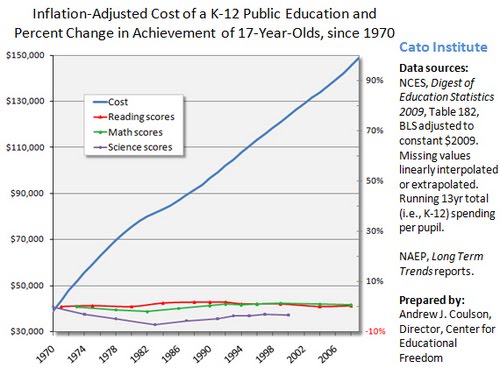
Rumin

I’m suppose to be studying for an exam tomorrow morning, but I’m buying time, looking for excuses to stimulate myself with something more exciting than calculating for net present value. I’m smoking a cigarette, sitting on my porch, typing, wearing a massive wool sweater, which is totally unnecessary considering how favorable the weather is tonight.

I came out here to smoke a cigarette. To allay some of that anxiety, to feed my tendency for procrastination. I thumbed through my phone, checked the time, and realized that, at this point in my life, there’s no one I care to share or exchange thoughts with, especially at this hour. And I couldn’t imagine anyone who’d actually be willing to chat it up at 130 in the morning either. This struck me as odd. For the vast majority of my life I always kept a list of those close confidants, those kindled spirits who share my enthusiasms and curiosities and would always be willing to talk whatever the hour. Maybe we’re getting older and our priorities are changing. But that really wasn’t what I thought. What I really thought was that I was becoming a misanthrope, slowly growing more and more disenchanted with people, their endless pantomimes and mindless banter. This left me feeling slighted. I love people. This is what I tell myself. I love people, but some people are better left alone, would rather tread water than explore the depths. And I really haven’t the patience for those folks anymore, despite whatever experiences we shared in the past. But then I thought again, maybe it’s not them. Maybe it’s me. Maybe I’m being too hard on them. Maybe I’m projecting discontents I secretly harbor against myself. Then I begin to think, what exactly am I so disenchanted with? What is it that I’m not fully appreciating here, about myself, about my life? I can’t seem to come up with anything, but I’m not surprised when I think about how deluded we are when it comes about assessing and being real with ourselves. Whatever that means.

My room mates are gone. Ones asleep. The other is out gallivanting into the night, rejoicing that finals have come to a close.

I spanned my memory bank and remembered someone who usually reciprocated curiosities and conversation. I reached out.

Continue reading “Rumin”

Feeling you want

So it’s feeling you want, is it? Something to move you, something visceral that arouses and wakes you? You want to feel? What a shame. I am the answer to your god forsaken prayers. I can make you feel alright, I can boil you, skin you, shake you.

Mother walked in with the wooden spoon. Her forehead was pleated with anger. Her eyes penetrated under her brow. Dark. Piercing. Her expression was not of disappointment, but anger, hate. I was the object of that hate, the animal that proved too much of a threat to deal with lightly.

Take off your pants. Continue reading “Feeling you want”

Dys-

Monsters we are, monsters that hide under flesh, gleaming eyes, sharp teeth, foul breath. We wait for dark to settle, for the shadows of ignorance to blanket the mind, then we sink our teeth and claws into your cold dead flesh. We don’t like the live ones, but that isn’t a worry since there’s so few of them, the live ones. We sink and we tear and we rip and we shred, then we mash meat and gargle blood and floss our jagged teeth with the sinews. We live like this because we want to wake people, we want to scare people from their desultory dreams, but we find that not only are these people unmoved and unperturbed, they’re altogether dead. There is no heinous crime desecrating the sleeping dead.

Flowers line the walkway. Little children in white dresses saunter ahead dropping petals as they walk. Oak trees sway as rays of light poke through the branches and land on the path before me. I grasp her hand and squeeze gently an affirmation of assurance, of our bond.  The children vanish and I am left staring into a hand holding only a pen, a slender cylindrical pen dark as the ink it jets. I continue weaving these fabrications onto paper before I hear a ring for supper. I  close my book and head downstairs to discover my family laying on the floor, in a heap, dismembered and bleeding, their eyes still open, their mouths still gaping their last gasp. They’ve been dead for weeks now but the stench is hardly the concern, rather its the putrified puddles of blood and bile now squirming with fly larva. I grab a stack of books on the stairs and lay them before me in the humors, like stepping stones, and make my way to the kitchen.  A waft of turkey liver titillates my nostrils just as I pop open the microwave. My favorite.

The hedges trimmed nicely, I thought. The sidewalk is swept and the mailboxes are full with new news. I observe a serry of school boys across the way huddled under the stop sign. They were probably in college by the looks of their swagger. Boat shoes and collared tees, frayed hats and cigarettes, all coupled with a laughter that bellowed into the air like toxic smoke that choked my lungs. I wanted to go over and begin strangling them all, one by one, but prudence stepped in.

Prudence was my dog. He had long white hair, as most sheep dogs do, and it dragged through every puddle and dirt pile he made his way through. This dog had particularly bad taste in women. He was always fond of the older types, the ones with fake teeth and hair rollers who wore stockings whenever they made trips to the seven eleven. It was their flesh he liked most of all. Maybe it was because Prudence was old and his senses were far less keen than what they use to be, but he loved to nuzzle and lick the crotch of these old ladies to their delight. It was a dog thing. They understood it. But they loved it. And if it wasn’t entirely inappropriate they would have taken Prudence home and made’em their own.

I pressed the weight, squeezing my will against the bar, pressing the fibers, contracting them together with enough force to pop the blood vessels in my face. When I was finished with the last rep I fell down and collapsed to the ground, grabbing my chest in pain. The hate, don’t go– I yelled– don’t leave me. Surely enough the hate returned and I began to reharness that focus and apply that hate to the weight. This is how strength is born.

Continue reading “Dys-“

Know Your Enemies: Insecurity and Threat

You can always spot those who are threatened by you because they will be the first to compete with you. Anyone who sees you as a threat is an enemy. The surest way to crush your enemies is to avoid competition. This does not make you weak; rather it makes you superior. Those who want to compete are attempting to bring you down to their level, to their preoccupations, and judge you according to their inferior criterion of worth. To preserve your prestige and remain impervious to your enemies, stage all competitions according to your rules and only your rules. By acquiescing to another standard of competition you compromise your integrity and forfeit the very values used to justify the individual greatness that they view threatening.

Your enemies suffer from insecurity; therefore they are threatened. Their lack of self-confidence is a lack of responsibility, a lack of faith in their ability to rise to the challenge or overcome or equate to external values. If they possessed faith in themselves, they would be secure. They would not be threatened by anyone or thing, nor would they compete in a test to measure their worth against another man.

Men of greatness compete with themselves and themselves alone, never compromising their self-generated criterion of worth. When someone extols their personal achievements, you can be sure that they struggle to possess an authentic sense of self. If the measures of greatness are self-generated and self-imposed, what need is there to publicly announce your achievement? The only hope for this announcement is an external affirmation of self.

When you live authentically, self-worth is derived through a process of becoming. Each man lives according to his own ends, as each man possesses his own set of demands afforded to him by life. He becomes more of what he embodies, of what values presuppose his every thought and action. It is vital that these values bolster the purest and greatest sense of self, the highest self-esteem possible.

Competition is death. Domination is the elimination of competition through sheer superiority of values. Would any competent man compete with an invalid? This is how the superior man, the over-man, must think. His values place him above such competition, out of sheer pity or principle. In this way he is morally superior: any competition must occur out of charity alone. I maintain that charity is the gravest form of oppression as it leads to domestication and enablement. Charity is a false generosity that ensures conditional dependency and establishes a hierarchy between the self-sufficient and the self-deficient.

Do you want to maintain superiority? Never compromise your values through competition except when you dictate the rules of the game. Otherwise, let the success of your self-guided actions speak for themselves. Never compromise your integrity, your authenticity, by playing to the rules of another game. Other’s will pine for your competition, but you must never stoop to their level unless the guarantee of winning is indisputable and inevitable.

Recall: familiarity breeds contempt. If you wish to know your enemies, see how they behave when they are lead to believe that they know you. Present yourself plainly as if there is nothing more than meets the eye, nothing deeper below the surface, and see what reaction this elicits. If there is insecurity, your enemy will capitalize at first chance to highlight the superiority they believe to perceive. Do not let this sway you into competition or emotion. Your self-worth, your value, is internally generated, not externally imposed. Any insecurity they voice through comparison or judgement reveals a chink in their sad suit of defense. Capitalize on this error at a later time.

Remain quiet. Do not speak of your achievements. Genius is often seen and seldom heard. When other’s pass judgment, do not flinch in their direction: remain stolid and steadfast. If need be, recalculate the rules of your game and press on toward self-mastery. Those who continue living in competition never reach heights of greatness because they fail to realize that greatness is attained from within. Greatness is demonstrably true, not by way of judgment, but of effect. Your impact on the world will be proportional to the original value you create within yourself.

Liberalism: Making Mankind into Cattle

Liberalism is the transformation of mankind into cattle.
-Nietzsche, Human, All Too Human (1878). I.67

What does this mean? Liberalism, in the philosophical sense that Nietzsche is using it, is an ethical framework in which man is free, equal, and autonomous. While this conception of man resonates with most as evidently true, I maintain that this is an illusory conception of man. Do we really believe that we are free? Equal? Autonomous? As with most comforting notions, we avow these ideals simply as a means of preserving the familiar, a mechanism of evasion that allows us to avoid the biting reality of our situation; namely, that we are not free, nor are we equal and autonomous.

What does Nietzsche mean when he says that liberalism is the transformation of mankind into cattle? It is the process in which individuality is smoothed over en masse, in which minds are watered down into a cloudy collective consciousness, where man is no longer a thinking spirit that possesses a unique soul but a mere facsimile. Being lead to believe that our thoughts are freely chosen, that we are as valuable as any man, that we can choose according to a unique volition, we cease to employ our internal reason, fail to reflect on our position, and assume that the ideals in which we derive our greatness are a right rather than a product.

I insist that freedom is a state of being that follows from mind, but my fellow man would hold that freedom is a state of existence that follows from body. Where these most evidently diverge, in my opinion, is when man finds himself in a state of perfect equilibrium.

When man has all his bodily needs satisfied, with every desire or whim or passion cared and provided for so that nothing is wanting, do we have a free man? Such a man would be no more free than a domesticated animal whose instincts have been muted and dulled, like an animal coddled and conditioned with pleasures generated by no necessity of its own. My fellow man, swept up in his allegiance toward the sensational, would insist that a man with all his desires satisfied is free, for what more could he want? But I would ask whether this standard– of having pleasure metted out in proportion to wants– is a good mark of freedom. Where does this standard leave man? In a perfect state of equilibrium. But is equilibrium man’s greatest achievement, his highest aim, the natural denouement of successful living?

I must ask myself more about equilibrium to discover whether this is a good measure for judging man. What is equilibrium? A state of rest or balance due to the equal action of opposing forces, an equality of balance, a calmness. From this definition I would ask whether we could equate equilibrium with man’s desire for self-preservation; is their aim one in the same?  Self-preservation is a process of maintenance of body and mind, so as to keep alive or conserve existence, or make lasting. In this light, equilibrium and self-preservation seem to be compatible states, achieving one in the same end, namely balance or preservation.

I must implore, however, as to whether this situation is reflective of nature, or a product of man’s mind? Is nature constantly seeking to retain equilibrium? Is life characterized by preservation?

Let’s observe the most obvious characteristics, in my mind, of natural experience: when my mind meets with the impressions afforded to me by my senses, there are two reigning features which traverse through all collective experience past and present. These being the continuity of consciousness and the constancy of change. The continuity of consciousness, I can conclude, is not a feature of experience, for even when I sleep I possess a consciousness, but a feature of mind alone. The constancy of change, however, is a guarantee endemic to nature, indelibly present throughout the physical world, that renders every moment of experience wholly unique and never the same.

Can we say that equilibrium and change are synonymous features? Certainly not. Does life stay the same, or is it in perpetual change? I would reply that life is in perpetual change, for I am not the boy of  my youth, neither is a frog still a tadpole or butterfly a caterpillar.

To exist occurs in the moment, to live occurs over moments. I hold then, that equilibrium is death, whereas disequilibrium is life. In this way existing is a mode of self-preservation, whereas living is a mode of thriving.

In summation, the satisfaction of desires, the end of want, places man in a state of equilibrium that is typified by the complacent tranquility which is characteristic of death. For man to be truly alive he must evolve, he must seek out disequilibrium, living in a state of anxiety and incertitude. To do this, man must not feign satisfaction, nor be satisfied with equilibrium.

Freedom, then, is disequilibrium, a form of living that transcends and expands consciousness. When change occurs, the man living in disequilibrium, having no complacent expectations, and always ready for change, does not flinch nor does he hesitate to move or act or think. His life is a fluid change.

This is freedom. Not all men possess it. Those who do act alone.

“Companions the creator seeks, not corpses, not herds and believers. Fellow creators the creator seeks—those who write new values on new tablets. Companions the creator seeks, and fellow harvesters; for everything about him is ripe for the harvest.”
—Nietzsche, Thus Spake Zarathustra